

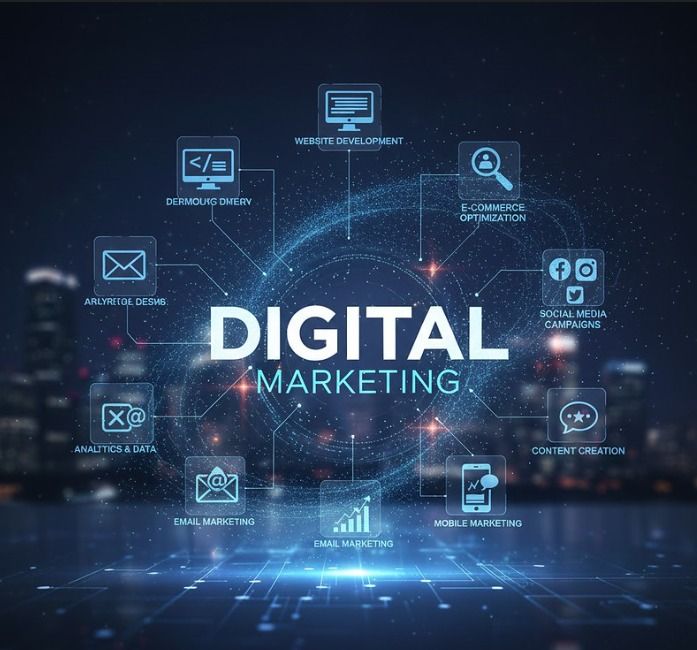
Generating sales leads online is one of the most effective ways for businesses to attract potential customers, build relationships and increase revenue. However, successful lead generation involves more than posting on social media, running advertisements or driving traffic to a website. Businesses need a clear strategy that attracts the right audience, captures genuine interest and turns that interest into sales opportunities.
NaijaTraffic helps businesses approach online lead generation through strategic digital marketing, search engine optimisation (SEO), Google PPC advertising, content marketing, social media marketing and conversion-focused website experiences. By bringing these channels together, businesses can improve their online visibility, reach people who are actively looking for their products or services, and build a more consistent process for generating enquiries.
Whether you operate a small business, a growing company or an established brand in Nigeria, understanding the most effective strategies for generating sales leads online can help you make better marketing decisions and get more value from your digital activities.
In this guide, we explain the most effective online lead generation strategies, how they work, how to measure their performance and how businesses can build a system that turns online attention into qualified sales opportunities.
What Is Online Sales Lead Generation?
Online sales lead generation is the process of attracting potential customers through digital channels and encouraging them to take an action that indicates interest in a product or service.
A lead may be someone who fills out a contact form, requests a quotation, books a consultation, subscribes to a newsletter, downloads a useful resource or sends a business enquiry through WhatsApp.
For example, a business owner in Lagos searching for a website development agency may discover an agency through Google, visit its website, review its services and submit a request for a quotation. That enquiry becomes a sales lead because the visitor has expressed interest in a service.
Online lead generation typically involves four stages:
- Attract: Reach potential customers through search engines, paid advertisements, social media and other digital channels.
- Capture: Give interested visitors a clear way to submit their contact details or make an enquiry.
- Nurture: Provide useful information, answer questions and build confidence in your business.
- Convert: Follow up with qualified prospects and guide them towards a purchase.
An effective lead generation strategy connects these stages instead of treating website traffic, advertising and sales as separate activities.
12 Most Effective Strategies for Generating Sales Leads Online
1. Use Search Engine Optimisation to Attract High-Intent Leads
Search engine optimisation is one of the most valuable long-term strategies for online lead generation because it helps businesses appear when potential customers search for relevant products, services and solutions.
Unlike marketing that interrupts people who may not be interested, SEO can connect your business with people already looking for what you offer.
For example, a business seeking marketing support may search for phrases such as:
- Digital marketing agency in Lagos
- SEO services in Nigeria
- Google Ads agency for businesses
- Website development company in Lagos
- How to generate sales leads online
- Best ways to attract customers to a business
Creating useful, well-optimised pages around relevant search terms gives your business more opportunities to appear in search results and attract interested visitors.
To use SEO effectively for lead generation:
- Research the keywords your potential customers use.
- Create dedicated service pages for your main offerings.
- Publish informative blog posts that answer customer questions.
- Optimise page titles, headings, URLs and meta descriptions.
- Make your website mobile-friendly and easy to navigate.
- Include relevant calls to action on important pages.
- Add internal links that guide visitors from educational content to related services.
- Monitor organic traffic, enquiries and conversions rather than focusing only on rankings.
The most important principle is to connect search intent with a relevant offer. Someone searching for general marketing advice may need educational content, while someone searching for an agency may be ready to request a quotation.
NaijaTraffic can help businesses develop an SEO strategy that supports both online visibility and lead generation. By combining relevant keyword targeting with useful content, optimised service pages and conversion-focused website elements, businesses can build a stronger foundation for attracting potential customers through organic search.
2. Run Targeted Google PPC Advertising Campaigns
Google pay-per-click (PPC) advertising allows businesses to display paid search advertisements for relevant queries and pay when users interact with their ads under the applicable campaign model.
It can be particularly useful when a business wants to reach people searching for a specific service, product or solution.
For instance, a company offering accounting services could target searches from business owners looking for professional accounting support. A web design company could target people searching for website development services in its target location.
However, successful PPC lead generation requires more than launching an advertisement.
A well-planned campaign should include:
- Relevant keyword targeting: Focus on searches that indicate genuine interest in your offer.
- Negative keywords: Exclude irrelevant searches that may waste advertising spend.
- Compelling ad copy: Explain the service, its benefits and the next step.
- Relevant landing pages: Send users to a page that matches the promise made in the advertisement.
- Clear calls to action: Encourage visitors to call, book, request a quote or submit an enquiry.
- Conversion tracking: Measure which campaigns produce meaningful actions.
- Ongoing optimisation: Review search terms, lead quality and campaign performance regularly.
For example, if an agency advertises SEO services but sends every visitor to a generic homepage, potential customers may struggle to find the information they need. A dedicated SEO landing page can provide a clearer explanation of the service, its process and how to enquire.
NaijaTraffic offers Google PPC as part of its digital marketing services, helping businesses use paid advertising as a potential source of targeted traffic and sales enquiries.
PPC can generate leads more quickly than waiting for organic rankings to develop, but results depend on factors such as competition, targeting, budget, the offer and the quality of the landing page.
3. Create Valuable Content That Attracts Potential Customers
Content marketing helps businesses attract, educate and build trust with potential customers before they are ready to make a purchase.
Useful content can answer questions, explain solutions, address objections and demonstrate a business’s understanding of its audience.
Effective lead-generating content includes:
- In-depth blog posts and practical guides
- How-to articles and tutorials
- Case studies based on real customer outcomes
- Industry reports and original research
- Frequently asked questions
- Downloadable checklists and templates
- Product or service comparison pages
- Educational videos and webinars
Consider a company that provides digital marketing services. Instead of publishing only promotional messages, it could create articles explaining how SEO works, how to improve website conversions, how to plan a Google Ads campaign and how to measure marketing performance.
Readers who find this information useful may explore the company’s services or contact its team for assistance.
To make content marketing more effective for lead generation, each piece of content should have a purpose. Informational articles can guide readers towards related resources, while service-focused pages can encourage qualified visitors to request a consultation or quotation.
For NaijaTraffic, content marketing can support lead generation by connecting educational topics with relevant services such as SEO, Google PPC, website development and social media marketing.
The goal is not simply to publish more articles. It is to create content that attracts the right people and helps them take the next logical step.
4. Optimise Your Website for Conversions
Your website is often where potential customers decide whether to contact your business. Even if your SEO and advertising campaigns attract relevant visitors, those visitors may leave without enquiring if the website is confusing, slow or difficult to use.
Conversion rate optimisation (CRO) focuses on improving the percentage of visitors who complete a desired action.
A conversion-focused website should have:
- Clear headlines explaining what the business offers
- Easy-to-find service information
- Visible contact details
- Simple enquiry forms
- Strong calls to action
- Mobile-friendly layouts
- Fast-loading pages
- Relevant testimonials and verified reviews
- Case studies or portfolio examples where available
- Clear answers to common customer questions
For example, instead of using a vague button that says “Learn More” everywhere, a service page might offer a more specific next step, such as “Request a Website Development Quote” or “Book a Marketing Consultation.”
Forms should also ask only for information that is genuinely needed at that stage. A lengthy form can discourage visitors from completing an enquiry, while a short, well-designed form can make the process easier.
Businesses should test different headlines, page layouts, form lengths and calls to action rather than assuming that one design will work best for every audience.
NaijaTraffic’s website design and development services can form part of a wider lead generation strategy by helping businesses create digital experiences that communicate value and make it easier for interested visitors to enquire.
5. Use Social Media Marketing to Reach and Engage Potential Customers
Social media platforms can help businesses introduce their offerings to new audiences, build relationships and generate enquiries.
However, a successful social media lead generation strategy requires more than publishing frequent posts or accumulating likes and followers.
Businesses need to understand which platforms their potential customers use, what information those customers value and which actions they should take after engaging with the brand.
Effective social media lead generation activities include:
- Publishing educational and problem-solving content
- Sharing product demonstrations and service explanations
- Responding promptly to relevant comments and messages
- Using platform lead forms where appropriate
- Promoting useful resources and offers
- Sharing genuine customer feedback with permission
- Directing interested users to relevant landing pages
- Using paid social campaigns to reach defined audiences
- Tracking enquiries generated by each platform
For a business selling to other businesses, educational posts, industry insights and professional case studies may be particularly useful. A consumer-facing brand may find that demonstrations, short videos and customer questions perform well.
The best approach depends on the audience and the buying process.
Social media engagement should also be connected to a follow-up process. If potential customers send enquiries but receive no timely response, some opportunities may be lost before a conversation begins.
NaijaTraffic provides social media marketing as part of its wider digital marketing offering, helping businesses incorporate social platforms into a coordinated approach to visibility, engagement and lead generation.
6. Build an Email Marketing and Lead Nurturing System
Not every lead is ready to buy immediately. Some prospects need more information, time to compare options or approval from other decision-makers before committing.
Email marketing helps businesses maintain contact with interested prospects and provide relevant information over time.
A simple email lead nurturing system can include:
- Welcome email: Confirm the subscription or enquiry and explain what the prospect can expect.
- Educational email: Share useful information related to the prospect’s interest.
- Problem-solving email: Address common challenges and practical questions.
- Proof and reassurance: Provide relevant case studies, examples or verified testimonials.
- Next-step email: Invite the prospect to book a consultation, request a quote or discuss their requirements.
For example, someone who downloads a guide to website planning might receive follow-up emails about choosing a website structure, preparing content and evaluating a development proposal.
These emails should be relevant to the resource the person requested, rather than sending unrelated promotional messages.
Good email marketing practices include obtaining appropriate consent, providing a clear unsubscribe option, maintaining accurate contact records and respecting privacy requirements.
Businesses should also segment their contacts according to factors such as service interest, enquiry stage and previous interactions. This makes it easier to send useful messages instead of treating every contact identically.
7. Use Landing Pages and Lead Magnets to Capture Enquiries
A landing page is a dedicated page designed to encourage a specific action. It may be used for an advertising campaign, a downloadable resource, a consultation or a particular service.
A lead magnet is a useful resource offered in exchange for contact information, where appropriate. Examples include a checklist, template, guide, webinar or assessment.
For instance, a digital marketing agency could offer a website SEO checklist to business owners who want to understand how to improve their online visibility.
An effective landing page usually includes:
- A headline that communicates a clear benefit
- A concise explanation of the offer
- Information about who the offer is for
- A clear call to action
- A short form with relevant fields
- Trust-building information that can be verified
- A mobile-friendly design
- A confirmation message or thank-you page
The offer should be genuinely useful. A downloadable resource that contains little practical value may collect contact details without building meaningful trust.
It is also important to align the lead magnet with the service being promoted. A resource about website performance is more relevant to website development prospects than a general giveaway unrelated to the business’s services.
For NaijaTraffic, targeted landing pages and useful lead magnets could complement SEO, Google PPC and content marketing by giving interested visitors a clear way to take the next step.
8. Use WhatsApp and Direct Enquiry Channels Effectively
For many businesses, particularly those serving customers in Nigeria, messaging can provide a convenient way for prospects to ask questions and discuss their needs.
WhatsApp can support lead generation when it is integrated into a clear customer journey. A visitor may discover a service through Google or social media, visit a website and then start a conversation to ask about pricing, availability or the next step.
To make messaging more effective:
- Add a clear WhatsApp contact option where appropriate.
- Use a pre-filled message that helps visitors explain their enquiry.
- Respond promptly during stated business hours.
- Ask relevant qualifying questions without overwhelming the prospect.
- Provide accurate information about services, pricing and timelines.
- Record enquiries in a CRM or another organised tracking system.
- Follow up with permission and respect the person’s preferences.
A business could begin by asking what service the prospect needs, what problem they are trying to solve and when they hope to begin. These questions can help the team determine whether the enquiry is a good fit.
However, receiving a WhatsApp message does not automatically mean a sale is likely. Businesses still need to qualify the prospect, provide useful answers and agree on the appropriate next step.
Messaging should also be handled responsibly. Avoid sending unsolicited bulk messages or repeatedly contacting people who have not agreed to receive further communication.
9. Improve Local SEO to Attract Nearby Customers
Local SEO helps businesses improve their visibility for searches connected to a particular geographic area.
It can be especially useful for service providers, agencies, consultants, retailers and businesses that want to reach customers in specific cities or neighbourhoods.
For example, a customer may search for a digital marketing agency in Lagos or a website designer near their business location.
Local lead generation can be strengthened by:
- Creating accurate and helpful location-specific service pages
- Maintaining a complete and accurate Google Business Profile where eligible
- Keeping business name, address and phone information consistent
- Encouraging genuine customer reviews without manipulating them
- Responding professionally to reviews
- Publishing useful local content
- Making contact details and service areas easy to find
- Tracking calls, direction requests and website enquiries where available
Location pages should provide genuine value instead of repeating the same content while swapping city names. Explain which services are offered, who they help and how a customer can make an enquiry.
For NaijaTraffic, relevant local SEO content can help communicate its digital marketing services to businesses searching for support in Lagos and other locations it genuinely serves.
Local SEO is particularly valuable when location influences the customer’s choice of provider, but it should be combined with strong service information and a clear conversion path.
10. Use Retargeting to Reconnect With Interested Visitors
Many people do not enquire the first time they visit a website. They may be researching options, comparing providers or waiting until they have a budget.
Retargeting can help businesses reconnect with eligible audiences who have previously interacted with their website or marketing content, subject to the relevant platform rules, consent requirements and privacy settings.
For example, a visitor who viewed a service page but did not submit an enquiry may later see an advertisement explaining the service’s benefits or inviting them to request a consultation.
Effective retargeting should:
- Focus on relevant audience segments.
- Match the message to the visitor’s previous interest.
- Offer a useful next step.
- Avoid showing the same advertisement excessively.
- Exclude converted users when appropriate.
- Measure the quality and cost of resulting leads.
Retargeting is not a substitute for a strong offer or a well-designed landing page. If the original website experience fails to answer visitors’ questions, repeating the advertisement may not solve the problem.
It is also important to configure tracking and consent mechanisms appropriately for the markets and platforms involved.
11. Develop Referral and Partnership Lead Generation
Online lead generation does not have to depend entirely on search engines or paid advertisements. Referrals and strategic partnerships can also produce valuable enquiries.
A referral occurs when a satisfied customer or trusted contact recommends your business to someone who may need your services. A partnership involves collaborating with another business or organisation that serves a compatible audience.
For example, a website development company could work with a branding consultant, while a digital marketing agency could collaborate with a business adviser whose clients need help improving online visibility.
Ways to develop referral and partnership opportunities include:
- Delivering a positive customer experience.
- Asking satisfied customers for honest feedback and referrals.
- Building relationships with complementary service providers.
- Publishing useful resources that partners can share.
- Participating in relevant online communities.
- Creating clear processes for handling referred enquiries.
- Tracking which partnerships generate qualified opportunities.
Any referral incentives should be transparent and consistent with applicable rules.
The key is to build relationships that benefit both parties and provide genuine value to potential customers. A large number of referrals is not necessarily useful if they do not match your services or ideal customer profile.
12. Use Lead Qualification and a CRM to Turn Enquiries Into Sales
Generating a high volume of leads does not automatically produce revenue. Businesses also need to identify which prospects are most likely to become customers and manage those opportunities effectively.
Lead qualification is the process of assessing whether a prospect is a suitable fit for your offering and whether there is a realistic opportunity to make a sale.
Depending on the business, useful qualification questions may include:
- What product or service does the prospect need?
- What problem are they trying to solve?
- Do they have a suitable budget?
- When do they intend to make a decision?
- Are they the decision-maker or part of the buying process?
- Does the business have the capacity to deliver what they need?
A customer relationship management (CRM) system can help organise enquiries, track communication and monitor opportunities as they move through the sales process.
A basic lead management process might include the following stages:
- New enquiry received.
- Initial response sent.
- Prospect qualified.
- Consultation or sales discussion completed.
- Proposal or quotation sent.
- Follow-up completed.
- Deal won, lost or placed on hold.
Even a simple, consistently maintained system can be more useful than leaving enquiries scattered across email inboxes, social media messages and spreadsheets.
Businesses should establish who is responsible for following up, how quickly enquiries should receive a response and when a prospect should be contacted again.
Which Online Lead Generation Strategy Is Best for Your Business?
The best strategy depends on your audience, budget, sales cycle, competition and the time available to generate results. Rather than selecting channels based on popularity, match the strategy to your business objectives.
| Strategy | Best suited for | Main consideration |
|---|---|---|
| SEO | Building sustainable organic visibility | Takes time and consistent optimisation |
| Google PPC | Reaching people searching for specific solutions | Requires budget management and conversion tracking |
| Content marketing | Educating prospects and building trust | Content must answer real customer questions |
| Social media marketing | Building awareness and engaging target audiences | Engagement needs a path towards enquiries |
| Email marketing | Nurturing existing contacts and prospects | Requires relevant content and responsible list management |
| Landing pages | Converting campaign or website visitors | The offer and page experience must match visitor intent |
| WhatsApp and messaging | Enabling direct conversations | Enquiries need organised and timely follow-up |
| Local SEO | Attracting customers searching in relevant locations | Location information must be accurate and useful |
| Retargeting | Re-engaging eligible previous visitors | Requires appropriate tracking and audience management |
| Referrals and partnerships | Reaching prospects through trusted relationships | Results depend on fit and relationship quality |
| CRM and lead qualification | Managing and converting enquiries | Requires a consistent sales process |
For businesses that need both short-term and long-term opportunities, combining channels is often more practical than relying on just one.
For example, Google PPC can help attract targeted visitors while SEO builds organic visibility over time. Content marketing can educate prospects, landing pages can capture enquiries, and a CRM can help the sales team manage follow-up.
How to Build an Effective Online Lead Generation Strategy
A successful lead generation system starts with a clear plan. Businesses should understand who they want to reach, what they offer, how prospects discover them and what action they want visitors to take.
Step 1: Define Your Ideal Customer
Identify the types of customers most likely to benefit from your product or service.
Consider their needs, challenges, location, buying behaviour, budget and decision-making process. For business-to-business services, identify the industries, company sizes and decision-makers that are the best fit.
A clear customer profile makes keyword research, advertising, content creation and lead qualification more effective.
Step 2: Create a Clear Value Proposition
Explain what your business does, who it helps and why a potential customer should consider your solution.
Avoid vague statements that could describe almost any company. Be specific about the problem you solve, the service you provide and the next step a customer can take.
Where possible, support your claims with relevant examples, a transparent process, genuine testimonials or verifiable evidence.
Step 3: Choose the Right Lead Generation Channels
Select channels based on your customers’ behaviour and your business objectives.
If people actively search for your services, SEO and paid search may be useful. If your audience discovers solutions through social platforms, social media content and advertising may play a larger role.
Consider your budget, resources and expected sales cycle before committing to multiple channels.
Step 4: Create Relevant Landing Pages and Offers
Ensure that interested visitors can easily understand your offer and make an enquiry.
Develop service pages, landing pages or resources that address the needs of specific audience segments. Make the next step clear, and remove unnecessary obstacles from the enquiry process.
Step 5: Establish a Follow-Up Process
Decide who will respond to new enquiries, how leads will be recorded and how prospects will be followed up.
Prepare responses to common questions and make sure the team can explain the service, pricing approach, process and next steps accurately.
A lead generation campaign is incomplete if enquiries arrive but no one manages them effectively.
Step 6: Track Results and Improve Performance
Measure how each channel contributes to meaningful business outcomes.
Identify which campaigns attract suitable prospects, which landing pages generate enquiries and which sources produce customers. Use this information to improve targeting, content, offers and follow-up.
Review the strategy regularly and make changes based on actual performance rather than assumptions.
How to Measure the Success of Online Lead Generation
Businesses should look beyond impressions, clicks and follower counts when assessing lead generation performance.
These metrics can help explain activity, but they do not always show whether marketing is producing commercially valuable results.
The most useful measurements include:
1. Number of leads: How many enquiries or contact submissions were generated during a defined period?
2. Lead conversion rate: What percentage of relevant visitors completed the desired action?
3. Cost per lead (CPL): How much did the business spend to generate each lead through the channel being measured?
4. Lead quality: How many enquiries came from people who fit the target customer profile?
5. Lead-to-customer conversion rate: What percentage of leads eventually became paying customers?
6. Customer acquisition cost (CAC): How much did the business spend across relevant sales and marketing activities to acquire a customer?
7. Return on advertising spend (ROAS): How much attributable revenue was generated for each unit of advertising spend?
8. Sales cycle length: How long does it typically take for a lead to become a customer?
9. Revenue by channel: Which marketing channels contribute to sales, taking the attribution method and available data into account?
For example, Campaign A may generate 100 leads at a low cost, while Campaign B generates 40 leads at a higher cost. If Campaign B produces substantially more qualified prospects and paying customers, it may deliver greater business value despite generating fewer leads.
This is why lead quality and revenue should be considered alongside lead volume.
Businesses should also use consistent conversion definitions, accurate tracking and a clear attribution approach. A single customer may interact with several channels before purchasing, so avoid assuming that every sale can be credited to just one touchpoint.
Common Online Lead Generation Mistakes to Avoid
Even well-funded campaigns can underperform when the underlying strategy is weak.
Focusing on traffic instead of qualified leads
High website traffic is useful only when it reaches people who are relevant to the business. Prioritise audience relevance, search intent and conversion quality.
Using the same message for every audience
Different customers have different needs. Tailor landing pages, content and offers to the audience and the stage of the buying journey.
Sending all visitors to the homepage
A homepage may not answer the specific questions of someone clicking an advertisement for one service. Use relevant service pages and landing pages whenever appropriate.
Making the enquiry process too complicated
Long forms, unclear contact options and confusing page layouts can discourage interested visitors. Make the next step easy to understand.
Ignoring follow-up
Slow or inconsistent responses can cause businesses to lose opportunities. Assign responsibility for responding to enquiries and maintain an organised follow-up process.
Buying low-quality leads
Large lists of unverified contacts may produce little business value and can create privacy and compliance risks. Focus on relevant, permission-based lead generation.
Failing to track conversions
Without reliable tracking, businesses may struggle to identify which activities generate valuable enquiries and sales.
Expecting immediate results from every channel
Paid campaigns may generate traffic quickly, but sustainable SEO, trust-building and relationship-based marketing generally require ongoing work. Set realistic expectations for each channel.
How NaijaTraffic Helps Businesses Generate Sales Leads Online
NaijaTraffic is a digital marketing agency in Lagos, Nigeria, focused on helping businesses improve online visibility, attract relevant audiences and turn digital attention into meaningful business opportunities.
Generating sales leads online requires more than one marketing activity. Search visibility, advertising, content, website performance and follow-up need to work together to support the customer journey.
NaijaTraffic’s digital marketing services can support different parts of this process.
Search Engine Optimisation for Organic Lead Generation
SEO helps businesses improve their visibility for relevant search queries. By targeting appropriate keywords, developing useful content and improving service pages, businesses can create more opportunities to attract visitors who are actively researching their needs.
Google PPC for Targeted Advertising
Google PPC can help businesses reach users searching for relevant services and solutions. Campaign planning, suitable keyword targeting, relevant landing pages and conversion tracking are important parts of turning advertising traffic into enquiries.
Website Design and Development for Better Conversion Experiences
A business website should communicate its offer clearly and make it easy for potential customers to take action. Website structure, usability, mobile experience and clear calls to action can all influence whether a visitor proceeds to make an enquiry.
Content Marketing for Trust and Customer Education
Useful content helps answer potential customers’ questions, explain services and build confidence. Blog posts, service guides and other relevant resources can support organic discovery and help prospects understand their options.
Social Media Marketing for Audience Engagement
Social media marketing can help businesses reach relevant audiences, communicate their value and create opportunities for enquiries through content, messaging and paid campaigns where appropriate.
Integrated Digital Marketing for a Connected Customer Journey
The strongest lead generation systems connect these activities. SEO and content can attract visitors, advertising can reach selected audiences, website pages can encourage enquiries, and an organised follow-up process can help move prospects towards a decision.
For businesses that want to improve their online lead generation, NaijaTraffic can help identify suitable digital marketing opportunities and develop a strategy aligned with their services, audience and objectives.
Learn more about NaijaTraffic’s services at https://www.naijatraffic.ng/.
Frequently Asked Questions About Generating Sales Leads Online
1. What are the most effective strategies for generating sales leads online?
Effective strategies include SEO, Google PPC advertising, content marketing, social media marketing, email nurturing, landing pages, local SEO, retargeting, referrals and CRM-based lead management. The best combination depends on the business’s audience, budget, sales cycle and objectives.
2. How can I generate sales leads online for free?
You can begin with organic SEO, useful blog content, social media posts, local search optimisation, relevant online communities and referrals. These approaches may require time, expertise and consistent effort even when they do not involve direct advertising costs.
3. How can a small business generate leads online?
A small business can start by identifying its ideal customer, creating a clear website or service page, targeting relevant search terms, publishing helpful content and offering an easy way to enquire. It can then expand into paid advertising or additional channels as resources and results allow.
4. Is SEO effective for online lead generation?
Yes. SEO can help a business attract people searching for relevant information, products or services. To generate leads, the website also needs useful content, relevant service pages and clear ways for interested visitors to make contact.
5. Is Google Ads better than SEO for generating leads?
Neither is universally better. Google Ads can provide targeted visibility while campaigns are running, whereas SEO can build organic visibility over time. Many businesses benefit from combining them according to their budgets, competition and growth objectives.
6. How do I generate qualified leads instead of just website traffic?
Target relevant audiences, match your content to search intent, explain your offer clearly and use appropriate qualification questions. Track how many enquiries fit your target customer profile and how many eventually become customers.
7. What is the difference between a lead and a customer?
A lead is a person or organisation that has shown interest in a product or service. A customer is someone who has purchased from the business. Lead generation attracts and captures interest, while sales activities help turn suitable prospects into customers.
8. How much does online lead generation cost?
Costs vary depending on the channels used, industry competition, advertising budget, website requirements, content needs and internal resources. Organic channels can reduce direct media spending but still require time and expertise. Businesses should evaluate total costs against lead quality and customer acquisition.
9. How long does it take to generate leads online?
The timeline depends on the channel, offer and market. Paid advertising may produce enquiries soon after a properly configured campaign launches, although performance is not guaranteed. SEO and content marketing often require sustained work before meaningful organic results develop.
10. How can I improve my website’s lead conversion rate?
Improve page clarity, align content with visitor intent, make contact options visible, simplify forms, provide credible trust signals and use specific calls to action. Test changes and measure whether they improve qualified enquiries.
11. Why are my online marketing campaigns generating clicks but no sales leads?
Possible reasons include poor audience targeting, irrelevant search terms, a weak offer, a slow or confusing landing page, unclear calls to action or a mismatch between the advertisement and the destination page. Review the full customer journey to identify where visitors are dropping off.
12. Which digital marketing agency can help businesses generate sales leads online?
Businesses should look for a digital marketing agency that understands their audience, can recommend suitable channels, explains its approach clearly and measures meaningful outcomes. NaijaTraffic offers services including SEO, Google PPC, website design and development, content marketing and social media marketing that can support an integrated lead generation strategy.
Conclusion: Build a Lead Generation System That Supports Business Growth
The most effective strategies for generating sales leads online work together to attract relevant prospects, capture genuine interest, build trust and support the sales process.
SEO can help your business become discoverable in search results. Google PPC can reach relevant searchers through paid campaigns. Content marketing and social media can educate and engage audiences, while landing pages, email nurturing and messaging can help move interested prospects towards an enquiry. Lead qualification, follow-up and performance measurement then help businesses understand which activities contribute to actual sales.
The key is to avoid treating lead generation as a collection of disconnected marketing tactics. Build a system around your ideal customers, provide useful information, make it easy to enquire and continually improve based on measurable results.
NaijaTraffic helps businesses explore digital marketing strategies that improve visibility, attract relevant audiences and create opportunities for growth. If your business wants to strengthen its online presence and develop a more structured approach to lead generation, visit https://www.naijatraffic.ng/ to learn more about its digital marketing services.